Common ravens on the Tempelhofer Feld airfield (© Theodor Koch)


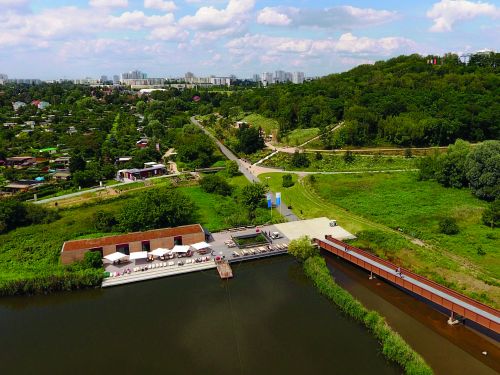
It is a stroke of great good fortune that a substantial "wilderness" area has been preserved in the heart of the global city of Berlin—a place where the natural evolution of flora and fauna has unfolded in a truly unique way from the past to the present. This is really the "DNA" of Berlin and a top tourist site. Since agricultural use ceased in the 18th century, the site's expansive meadows and their ecological diversity have remained untouched by artificial fertilizers, pesticides, or the ploughing that typically transforms land into cultivated monocultures. Tempelhofer Feld also serves as a prime example of how a remarkably diverse community of animals and plants has managed to survive despite years of flight operations, soil fill, and exposure to exhaust fumes, particulate matter, and aviation fuel. Many rare species are found here, including plants (e.g., thrift/sea pink), fungi (e.g., *Lepista saeva* or field blewit), insects (e.g., common blue butterfly), reptiles (sand lizard), and rare mammals (hedgehogs). Birds that rely on Tempelhofer Feld for foraging serve as excellent, conspicuous indicators of ecological diversity. Consequently, this tour includes information on these visiting bird species—even though we may only be able to observe a few of them during the walk itself. These species range from Kestrel, hooded crows and magpies to the green woodpecker, buzzard, goshawk, sparrowhawk, raven, and rook, as well as—very rarely—lapwing, jackdaw, short-eared owl, or red kite. We will traverse the field to a former cemetery on Hermannstraße, where we may catch a glimpse of long-eared owls at their roosting site.

 Zu Ihrem Kalender hinzufügen
Warum Artenkenntnis wichtig ist
Zu Ihrem Kalender hinzufügen
Warum Artenkenntnis wichtig ist